Ottawa and TELUS Advance Plan for Sovereign AI Data Centre in BC
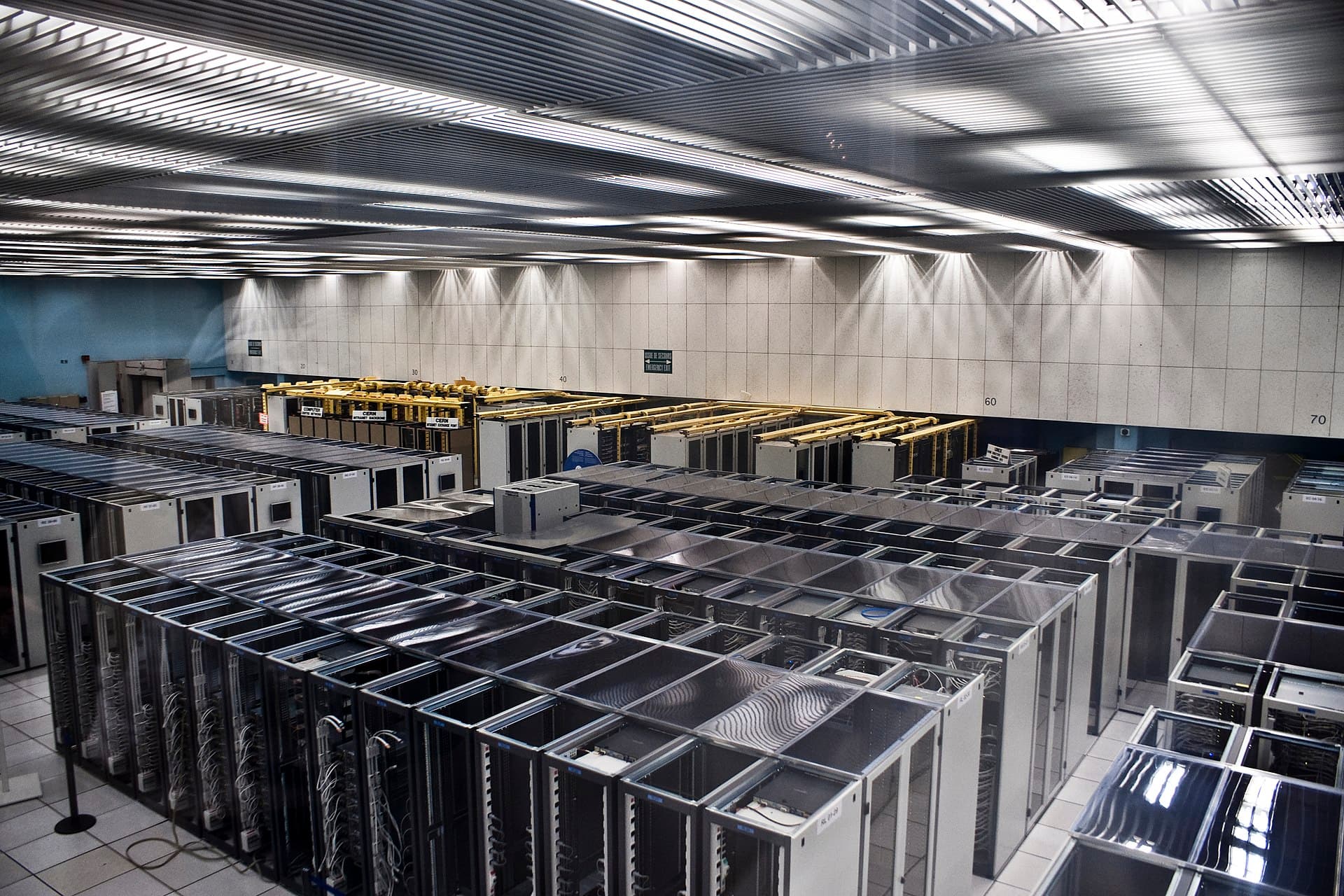
The federal government is pressing ahead with its push to build artificial intelligence infrastructure on Canadian soil, announcing that it and telecommunications company TELUS are advancing work on a large-scale sovereign AI data centre in British Columbia. The move is part of a broader national strategy, backed by hundreds of millions of dollars in federal funding, to ensure that the computing power underpinning Canada's AI ambitions, along with the data and governance that go with it, stays within the country's borders.
What was announced
The Government of Canada and TELUS said they are advancing the proposed project under Ottawa's initiative to enable large-scale sovereign AI data centres. The British Columbia facility is intended to increase Canada's domestic compute capacity and support a wider innovation ecosystem that spans academia, industry and the public sector. The announcement is one of several recent moves by the government to translate its AI strategy into concrete infrastructure.
Around the same time, the AI minister announced that the federal government is providing tens of millions of dollars to dozens of Canadian artificial intelligence projects to help them access the compute power they need to commercialise and scale their work. That funding is aimed at smaller firms and researchers who often struggle to secure the expensive computing resources required to train and deploy advanced AI models.
The data centre project and the project funding sit under the umbrella of the AI Sovereign Compute Infrastructure Program, which is designed to channel roughly $890 million over seven fiscal years into the design, construction and operation of domestic compute systems. The program opened applications with a deadline at the start of June, signalling that the government intends to move quickly from strategy to shovels.
Why sovereignty matters
The central idea behind the strategy is sovereignty: keeping the data, governance and operational control of critical AI infrastructure inside Canada. As artificial intelligence becomes more deeply woven into the economy, governments around the world have grown wary of relying entirely on foreign-owned computing capacity and the legal and security risks that can come with it.
For Canada, the concern is heightened by its proximity to and dependence on the United States, a dynamic thrown into sharp relief by the ongoing trade conflict. Ensuring that Canadian researchers and businesses can access advanced computing without having to route sensitive data through foreign jurisdictions is, in the government's view, both an economic and a security imperative.
The strategy also reflects a recognition that compute has become a strategic resource akin to energy or telecommunications. The ability to train large AI models depends on access to vast amounts of specialised processing power, and countries that lack domestic capacity risk falling behind or becoming dependent on others. Building that capacity at home is the government's answer.
The role of industry
The partnership with TELUS illustrates the government's approach of pairing public funding with private capacity. Rather than building and operating data centres itself, Ottawa is leaning on established companies with the technical expertise and infrastructure to deliver. The British Columbia project would add to the country's compute footprint while keeping it under Canadian ownership and control.
The broader funding for dozens of AI projects, meanwhile, is intended to address a persistent complaint from Canada's research and startup communities: that access to compute has been a bottleneck holding back homegrown innovation. By subsidising access, the government hopes to keep promising Canadian talent and companies from being lured abroad or stalled by costs.
The combination of large-scale infrastructure investment and targeted support for individual projects reflects a two-track strategy. One track builds the foundational capacity; the other ensures that Canadian innovators can actually use it. Whether the two tracks reinforce each other as intended will depend on execution over the coming years.
The economic stakes
The AI push fits squarely into the Carney government's broader economic agenda, which has identified data infrastructure as one of the key sectors for attracting the large-scale investment the prime minister has been courting. Data centres are capital-intensive projects that promise construction jobs, regional development and a long-term role in the digital economy.
There are tradeoffs to weigh. Large data centres consume significant amounts of electricity and water, raising questions about energy supply and environmental impact, particularly as Canada works toward its climate commitments. Siting such facilities where clean, abundant power is available, as British Columbia's hydroelectric capacity can offer, is part of how governments and companies try to square those competing demands.
For the broader economy, the bet is that domestic AI capacity will pay dividends across sectors, from health care and resource management to financial services and manufacturing. Productivity has been a chronic weakness in the Canadian economy, and proponents argue that AI, properly harnessed, could help address it.
What it means for Canadians
For most Canadians, the benefits of sovereign compute are indirect but real. The infrastructure underpins services and innovations they may use without ever seeing the data centres themselves, from AI tools in workplaces to advances in research and public services. Keeping that infrastructure domestic also means decisions about how data is handled are made under Canadian law.
For researchers, startups and businesses, the funding offers a more immediate benefit: cheaper and more reliable access to the computing power that has become a prerequisite for competing in an AI-driven economy. That access could help Canadian firms scale up rather than being forced to look abroad.
There are also questions the strategy raises that Canadians may want answered, including how the environmental footprint of large data centres will be managed and how the government will ensure that public investment delivers public benefit. Those debates are likely to sharpen as projects move from announcement to construction.
The global race for compute
Canada's push to build domestic AI capacity is part of a broader international scramble. Governments around the world have come to view access to advanced computing power as a strategic priority, on par with energy security or control over critical minerals. The countries and companies that command the most compute are best positioned to lead in a technology expected to reshape economies and militaries alike.
That competition has driven enormous investment globally, with massive data-centre projects under construction and fierce demand for the specialised processors that power AI systems. For a mid-sized economy like Canada's, keeping pace presents a challenge: the country must invest enough to remain relevant without the scale of the largest players, and must do so in a way that plays to its particular strengths.
Canada does bring advantages to the race. Abundant clean electricity, a cold climate that reduces cooling costs, political stability and a strong research base all make the country an attractive location for data infrastructure. The government's strategy is, in part, an effort to capitalise on those natural endowments before the window of opportunity narrows.
The energy and environmental tradeoffs
The expansion of AI infrastructure carries significant environmental implications that will demand careful management. Large data centres are voracious consumers of electricity, and the surge in AI computing has raised concerns globally about the strain such facilities place on power grids and the emissions associated with meeting their demand.
Siting the British Columbia project in a province rich in hydroelectric power is one way to mitigate those concerns, allowing the facility to draw on relatively clean energy. Water use for cooling is another consideration, as is the broader question of whether grid capacity can accommodate a wave of new data centres without compromising other priorities or driving up costs for consumers.
These tradeoffs sit awkwardly alongside Canada's climate commitments, creating a tension the government will have to navigate. Proponents argue that domestic data centres powered by clean electricity are preferable to relying on facilities abroad that may be powered by fossil fuels. Critics counter that the cumulative energy demand of an AI buildout could complicate efforts to decarbonise. Reconciling the AI ambition with environmental goals will be an ongoing balancing act.
The talent dimension
Beyond infrastructure and hardware, the success of Canada's AI ambitions depends on people. The country has long produced world-class researchers in artificial intelligence, with Canadian universities and research institutions having played a foundational role in the development of the field. Retaining that talent has been a persistent challenge.
One of the chronic difficulties has been the lure of large foreign technology companies, which can offer compensation and computing resources that Canadian institutions and startups struggle to match. The result has been a steady drain of homegrown expertise abroad, a loss that undercuts the country's ability to capitalise on its research strengths. Access to domestic compute is one piece of the puzzle in addressing that challenge.
By funding access to computing power for Canadian projects and building domestic infrastructure, the government hopes to make it more attractive for researchers and companies to build their futures in Canada. Whether those measures are sufficient to stem the flow of talent, in the face of intense global competition for AI expertise, remains an open question, but they reflect a recognition that infrastructure alone is not enough without the people to use it.
What's next
With applications to the sovereign compute program open and the British Columbia project advancing, the coming months will reveal how quickly the strategy translates into operational capacity. The government has set ambitious timelines, and delivering on them will require coordination among federal officials, provincial authorities and private partners.
The broader test is whether Canada can build enough domestic compute to keep pace with global demand while managing the energy and environmental implications. If it succeeds, the country could secure a measure of independence in a technology increasingly central to economic and national security. If it falls short, it risks remaining dependent on others for one of the defining resources of the coming decade.
For now, the announcements mark a concrete step in a strategy that has been years in the making. The challenge ahead is execution, and the stakes, for Canada's economy and its technological autonomy, are considerable.
Spotted an issue with this article?
Have something to say about this story?
Write a letter to the editor


Comments
Be the first to comment.