Ottawa Senators' Playoff Return: Can Brady Tkachuk Lead a Deep Run?
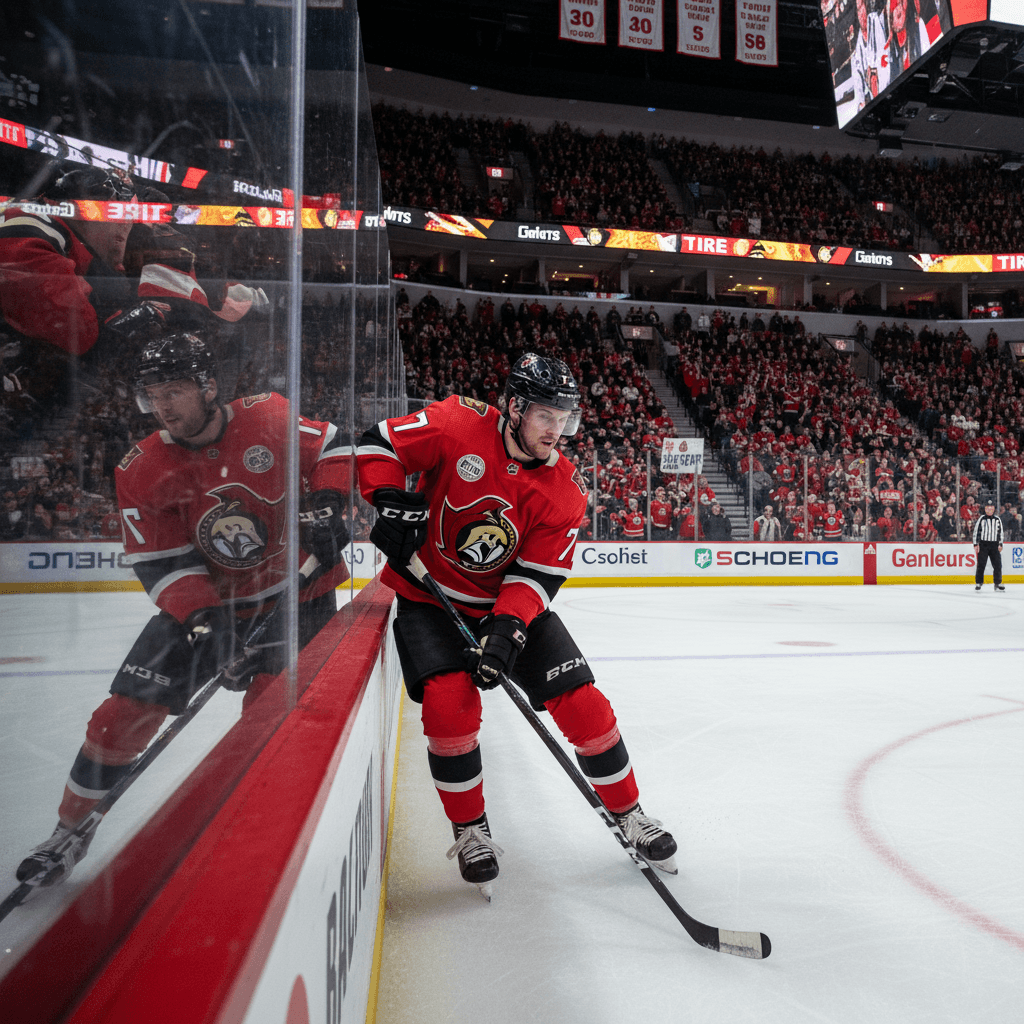
The Return Ottawa Has Been Waiting For
There was a moment during the Ottawa Senators' playoff drought when the question stopped being about winning and started being about identity. The franchise that had produced legends, reached a Game 7 of the Eastern Conference Final in 2017, and maintained a fiercely loyal fanbase through years of mediocrity needed to find its foundation before it could find its ceiling. That foundation arrived in the form of Brady Tkachuk, the physically dominant power forward who chose Ottawa over a more glamorous market and became the cornerstone of everything that followed.
In April 2026, the rebuild is not just complete. It has produced a playoff team. The Ottawa Senators have earned their postseason berth through a full season of competitive, purposeful hockey, and they enter the first round with a roster that is not just happy to be there. They are a team that believes, genuinely, that a deep playoff run is within their capabilities. That belief, coming from a young team that has not experienced the weight of postseason failure in the way that older franchises have, may be the most dangerous thing about them.
For Ottawa fans who have waited years for this moment, the specifics of the bracket matter less than the simple, profound fact that their team is in. The rest is hockey, and hockey, as anyone who has followed the Senators long enough knows, has a way of surprising people.
How Ottawa Earned Their Playoff Spot
The Senators' path to the 2026 playoffs was not a straight line. There were stretches of the season where the team lost multiple consecutive games and the external commentary pivoted back to familiar questions about whether this organisation was actually ready to compete at the level required for consistent postseason appearances. Each time those questions arose, Ottawa found an answer on the ice, usually through the combination of Tkachuk's physical dominance and Tim Stutzle's offensive brilliance.
The team finished the regular season with enough points to secure an Atlantic Division playoff position, and the manner in which they accumulated those points tells a story about the team's identity. Ottawa won games through forecheck pressure, through physical play along the boards and in the corners, and through special teams execution that improved significantly as the season progressed. Their power play found its rhythm in the second half and became a genuine weapon rather than a liability.
The Atlantic Division is among the toughest in the conference, and the Senators earned their position by beating playoff-calibre teams on their best nights. General Manager Steve Staios deserves credit for the patience and strategic clarity that allowed this rebuild to proceed without panicked trade deadline moves that derail development timelines. The core playing in the 2026 playoffs is largely the core assembled through the draft and through targeted free-agent additions, and its cohesion reflects the fact that these players have grown up together in the organisation.
Brady Tkachuk: The Face of a Franchise Reborn
Brady Tkachuk is a different kind of NHL star than the sport has produced in significant numbers recently. In an era that increasingly rewards speed, skill, and shot metrics, Tkachuk wins by making the game physically unpleasant for his opponents. He takes up space on the ice in ways that create real consequences. He battles in the corners and in front of the net with an intensity that is difficult to prepare for and impossible to ignore, and he scores important goals, not just accumulation goals, but the kind that shift the psychological momentum of a game.
His statistics in the 2025-26 regular season continued the upward trajectory that has defined his tenure as Ottawa's captain. His goal total, his physical engagement numbers, his faceoff percentage, and his time on ice in critical situations all reflected a player who has fully arrived as an elite NHL forward. The part that does not appear in a box score is the way his teammates play differently when he is on the ice, with a confidence that comes from knowing that the most physically imposing player on the ice is on your side.
Tkachuk's decision to remain in Ottawa, to sign the long-term contract and commit to the rebuild at a time when he could have sought a trade to a contender, is the kind of loyalty that a franchise builds its culture around. The players in the dressing room who came after him arrived in an organisation that already had its standard-bearer, already had its definition of what being a Senator meant. That clarity of identity is not something money can buy. It has to come from a player who embodies it.
Tim Stutzle and the Supporting Cast
Tim Stutzle has evolved from a promising young centre into one of the most complete forwards in the Atlantic Division, and his development has been central to Ottawa's competitiveness. The German-born centre brings a combination of skating, playmaking, and two-way awareness that gives the Senators a different offensive threat from their top line than Tkachuk provides. While Tkachuk generates offence through force, Stutzle generates it through creativity, through the kind of deceptive puck movement and skating patterns that force defenders to guess and usually guess wrong.
Drake Batherson, often the least-discussed member of Ottawa's top three forwards in national media coverage, is a skilled winger whose ability to find open space in the offensive zone and convert on quality chances makes him more valuable in a playoff context than his regular-season totals might suggest. He makes the people around him better, and that complementary quality is precisely what a balanced playoff lineup requires.
The defensive core that Ottawa has built around their offensive stars allows the forwards to be aggressive in the offensive zone because there is trust at the back end. The Senators' defensive group is not elite, but they are disciplined and well-structured, and their ability to limit high-danger chances against in the regular season suggests they can compete defensively in a seven-game series.
Goaltending Reliability: The Key Variable
Every playoff team's viability ultimately runs through the crease, and Ottawa is no different. The reliability of Ottawa's starter is the factor that will most directly determine how far this team can advance. A hot goaltender can carry a young team past opponents who are statistically superior. An inconsistent goaltender will expose every defensive gap that a seven-game series will inevitably find.
Ottawa's starter enters the playoffs having performed adequately in the regular season, which is a foundation but not a ceiling. The demand is for elevation, for the kind of back-stopping performances that give the skaters in front of him the confidence to take offensive risks knowing that if a rush the other way produces a good chance, the goaltender will make the save.
The Senators' penalty kill will be heavily taxed in their first-round series, because opposing teams will target Ottawa's physical style with power-play opportunities. If Ottawa's goaltending and penalty killers can hold firm on the man disadvantage, it removes one of the primary tactical tools their opponent will deploy, and that is a significant ask for a team experiencing its first postseason in years.
The First-Round Matchup and Series Breakdown
Ottawa's first-round opponent is a test that will immediately reveal whether the Senators' regular-season success translates to playoff survival. The opponent has experienced players who understand playoff hockey's specific rhythms, who know how to manage a series, and who will not panic if Ottawa comes out with the emotional energy of a team playing its first playoff game in years.
The tactical keys for Ottawa are straightforward to identify and difficult to execute. They need to establish their physical game early, making the ice small and the series uncomfortable for the opposition's top offensive players. They need Tkachuk on the ice in the right situations, Stutzle to be dangerous at 5-on-5, and the power play to convert when opportunities arise.
The series prediction that makes the most tactical sense is a competitive six or seven games, with Ottawa stealing at least one game on the road and forcing the opposition to respond to their physical style. Whether Ottawa wins or loses will likely come down to goaltending and whether Stutzle can match the offensive output of the opposing team's top centre.
What a Deep Run Would Mean for Ottawa
The franchise implications of a genuine playoff run in 2026 extend well beyond the immediate results on the ice. Ottawa is a hockey city that has maintained its passion through years of disappointment, and the return of playoff hockey has already energised the fanbase. A second-round appearance or beyond would transform that energy into something permanent: a genuine belief that Ottawa is a team worth following because the results justify the investment.
The rebuilding narrative that has defined the Senators for the better part of a decade would officially come to an end with a meaningful playoff run. It would be replaced by a new narrative, one of an established competitive team with a young core, a distinctive identity, and a reasonable expectation of annual relevance.
Ottawa's Ceiling and the Future of This Run
The realistic ceiling for the 2026 Ottawa Senators is a second-round appearance, which would represent a significant achievement for a franchise in the process of establishing itself as a legitimate annual playoff team. A first-round upset would be the immediate goal, and given the way Ottawa plays and the quality of their top line, that goal is attainable rather than aspirational.
The longer-term ceiling for this franchise, looking ahead two or three postseasons, is considerably higher. Tkachuk is entering the prime years of his career. Stutzle is still developing. The organisation's drafting and development infrastructure has proven itself capable of producing NHL-ready players consistently. If the goaltending question resolves itself and Ottawa adds another top-four defenceman in the next two offseasons, this team has the building blocks of a genuine Eastern Conference contender.
For now, the focus is on Game 1, then Game 2, then whatever comes next. Ottawa earned their place in the 2026 playoffs through a full season of competitive, identity-driven hockey, and they deserve every moment of the attention and excitement that comes with being there. Brady Tkachuk, Tim Stutzle, Drake Batherson, and the rest of the Senators have given their city something it has been missing for too long: a reason to believe in April.