Saint John Hosts U18 Atlantic Hockey Championship: Grassroots Hockey Pride
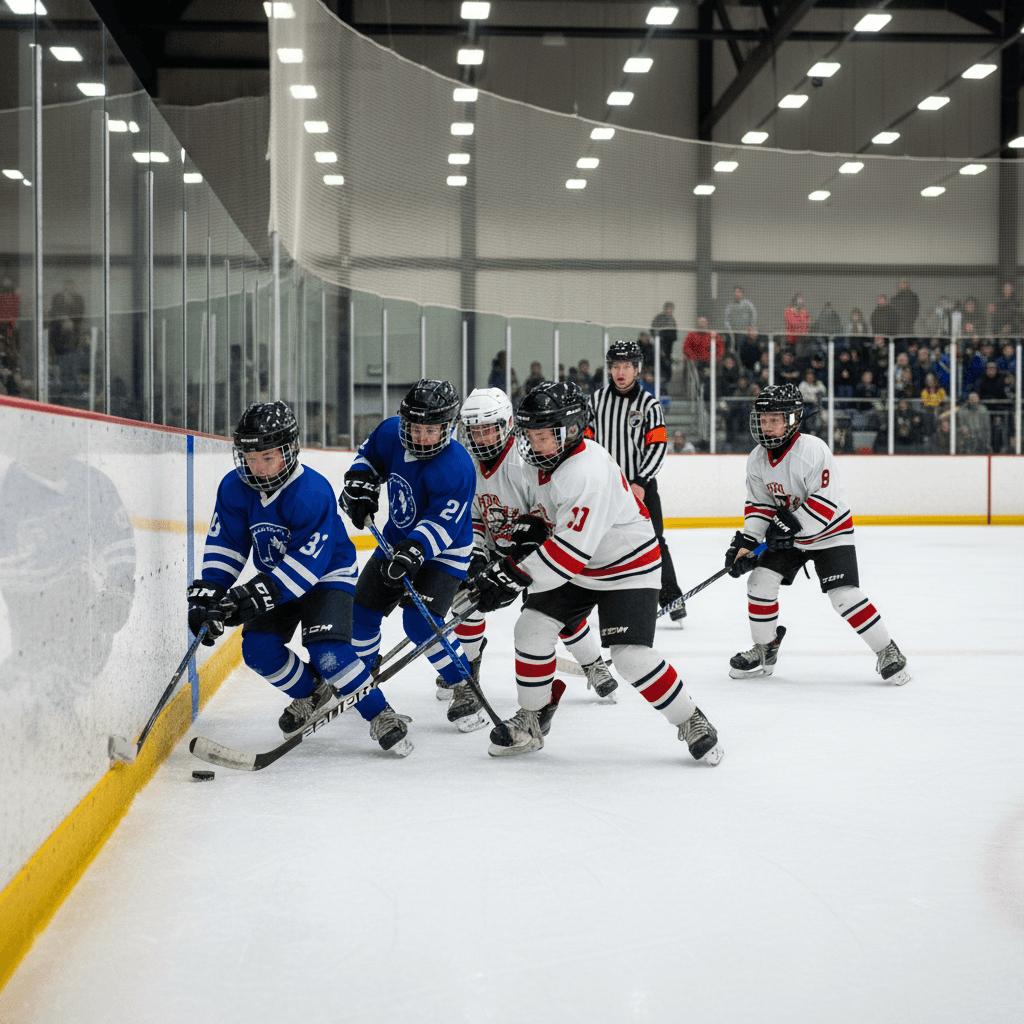
The ice surfaces at the QPLEX facility in Quispamsis were the proving grounds for Atlantic Canada's next generation of hockey talent when the 2026 U18 Atlantic Championship came to the Saint John area in early April. The tournament, hosted by the Saint John Vito's, brought together elite bantam-aged players from across New Brunswick, Nova Scotia, Prince Edward Island and Newfoundland and Labrador, offering scouts, coaches and families a window into the players who will shape the region's hockey story over the next decade.
For a region that consistently punches well above its weight in producing NHL-calibre players relative to its population, the Atlantic championship is more than a youth hockey tournament. It is a statement about how deeply the sport is woven into the cultural fabric of eastern Canada and a testament to the development infrastructure that organizations like Hockey New Brunswick have built over decades of steady, community-driven work.
The Quispamsis QPLEX facility, a modern multi-pad complex on the outskirts of Saint John, offered the ideal venue: sufficient ice surface to run a competitive round-robin and playoff format, modern dressing rooms and spectator capacity that could accommodate the families and scouts who travel significant distances to watch Atlantic hockey at the U18 level. The Saint John Vito's organization, a longstanding pillar of New Brunswick minor hockey, served as host and provided the organizational backbone that made the event run smoothly from registration through the final game.
How the Tournament Works
The U18 Atlantic Championship operates under Hockey Canada's bantam-age framework, bringing together provincial representative teams selected through tiered tryout processes in each Atlantic province. Players are generally 16 to 18 years old, competing at the highest level of development hockey in the region before the majority of the top performers move on to the Quebec Major Junior Hockey League or other Canadian Hockey League circuits.
The format typically involves a round-robin pool stage where each provincial team faces the others at least once, accumulating points that determine seeding for the playoff rounds. The medal games carry significant symbolic weight in Atlantic hockey communities, and the championship game regularly draws the region's most accomplished hockey families and development staff.
Coaches and general managers from QMJHL teams attend in significant numbers, using the tournament as an opportunity to evaluate players they have been tracking through provincial circuits and to make final assessments before the major junior draft. For players, performing well at the U18 Atlantic championship can be the difference between a high draft selection and falling to later rounds, making the competitive intensity unusually high for players of that age.
Top Prospects From Atlantic Canada
Atlantic Canada's U18 generation in 2026 includes several players who have been on QMJHL and national radar since their early teenage years. New Brunswick has a particularly strong cohort of forwards and defencemen who have developed within the Vito's and Fredericton programs, and Nova Scotia continues to produce excellent goaltending and defensive prospects through the Nova Scotia Major Bantam Hockey League system.
Prince Edward Island, despite its small population, consistently fields competitive teams built around a handful of elite prospects who benefit from the province's tight-knit development environment. The Island has produced NHL players out of proportion to its approximately 170,000 residents, a fact that speaks to the quality of coaching and the sheer number of hours young players spend on the ice in communities where hockey rinks are central civic institutions.
Newfoundland and Labrador's U18 program has invested heavily in regional development infrastructure in recent years, and the province's team at the 2026 championship reflected that investment. Players from Corner Brook, Grand Falls-Windsor and St. John's arrived with notable major junior interest already attached to their names, a sign that the Atlantic pipeline from Newfoundland specifically has strengthened considerably in the post-pandemic development years.
New Brunswick's Hockey Development History
New Brunswick's relationship with hockey stretches back to the early twentieth century, when the sport took root in mill towns and fishing communities across the province as both recreation and community ritual. The province's cold winters, abundant ice and tight-knit community structures created ideal conditions for the sport to embed itself across generations, and by the mid-twentieth century New Brunswick was regularly sending players into professional leagues.
The formalization of development infrastructure accelerated in the 1970s and 1980s as Hockey New Brunswick worked to create a coherent pathway from house league through rep hockey and into elite junior. The formation of the New Brunswick Major Midget Hockey League and the province's integration into the QMJHL's feeder structure gave talented players a clear route toward professional opportunities that had previously been far less defined.
Saint John specifically has a rich hockey tradition anchored by its QMJHL franchise, the Saint John Sea Dogs, who have won the Memorial Cup and consistently developed high-draft NHL talent. The presence of a major junior franchise in a mid-sized city creates a visible professional standard that younger players aspire to and that coaches can point to as a concrete destination for hard work and development focus.
The Role of Hockey New Brunswick
Hockey New Brunswick is the provincial governing body responsible for registering players, certifying coaches, organizing leagues and selecting representative teams for national and regional competitions. It operates under Hockey Canada's framework but has significant autonomy in shaping how the game develops within the province's specific geographic and demographic context.
The organization has invested substantially in coach education, recognizing that the quality of instruction at the grassroots level determines whether talented young athletes develop the foundational skills that make them competitive at higher levels. New Brunswick's geography creates a challenge: many of the province's best young players grow up in smaller communities hours away from elite training facilities, and Hockey NB has worked to bring high-quality programming to those communities rather than requiring families to relocate to access it.
The organization also manages the provincial selection process for tournaments like the U18 Atlantic championship, coordinating tryouts across multiple centres and assembling a team that represents the full geographic and community diversity of New Brunswick hockey. That process generates its own grassroots engagement, as thousands of players attend tryouts and families invest in the pursuit of provincial representation.
Atlantic Canada's Hockey Talent Relative to Population
The per-capita rate at which Atlantic Canada produces NHL players is consistently among the highest in Canada and, by extension, among the highest in the world. A region with roughly 2.4 million residents, representing less than seven per cent of Canada's population, has produced a share of NHL players that significantly exceeds that proportion.
Analysts who study hockey development attribute this to several factors. First, the cultural centrality of hockey in Atlantic communities means that a higher proportion of young athletes focus on the sport with a seriousness that translates into elite skill development. Second, the regional development infrastructure, built through decades of volunteer and institutional effort, channels talented players into progressively more competitive environments from a young age. Third, the QMJHL provides a natural stepping stone that gives Atlantic players exposure to the competitive intensity of major junior hockey earlier than some of their counterparts in other leagues.
The population-adjusted output is most striking in smaller provinces. Prince Edward Island has produced players who have accumulated thousands of NHL games despite having a population smaller than most mid-sized Canadian cities. Newfoundland and Labrador, geographically isolated and with a relatively small hockey-playing population, has a similarly impressive record. New Brunswick and Nova Scotia, with larger bases to draw from, produce larger absolute numbers of NHL players and have historically been significant suppliers to the league.
The Pipeline to the QMJHL
For the players competing at the 2026 U18 Atlantic championship, the immediate next step is the QMJHL Draft, through which the league's 18 teams select players from the Atlantic provinces, Quebec and increasingly from European and American development programs. The draft is a significant milestone: players selected in the early rounds receive an immediate entry into one of the most competitive major junior leagues in North America, with the associated coaching, travel and exposure that accelerate development.
Atlantic Canadian players have historically been well-represented in the early rounds of the QMJHL Draft. Teams like the Halifax Mooseheads, Moncton Wildcats, Charlottetown Islanders, Cape Breton Eagles and Saint John Sea Dogs provide regional destinations that allow players to develop close to home, maintaining family connections while competing at a level that prepares them for professional hockey.
The Saint John Sea Dogs in particular have become a model of how a mid-sized Atlantic market can sustain a successful major junior franchise. Their Memorial Cup championship and the number of alumni who have gone on to NHL careers are points of genuine regional pride and tangible evidence that the development pipeline from Atlantic minor hockey through major junior and into professional play is functioning as intended.
Atlantic NHL Alumni and Historical Reach
The list of Atlantic Canadian players who have built significant NHL careers is long and spans generations. From Hall of Fame contributors who established themselves in earlier eras to contemporary players currently in the prime of their careers, the region's contribution to the highest level of the sport is undeniable. New Brunswick, Nova Scotia, PEI and Newfoundland have all produced first-round draft picks, roster staples and impact players across all six NHL positions.
For the players skating at QPLEX in April 2026, those alumni represent both aspiration and proof of concept. The young athletes competing for Atlantic U18 honours are not pursuing an improbable dream. They are following a path that generations of Atlantic Canadian players have walked before them, supported by the same kind of community investment, coaching dedication and cultural passion for the game that has made the region a consistent exporter of elite hockey talent to the rest of North America and beyond.